
Product range
FST & Fence Security Toppings
FST and compatible hostile/non-hostile topping add-ons supplied as part of Binns fence packages, not as standalone razor wire.
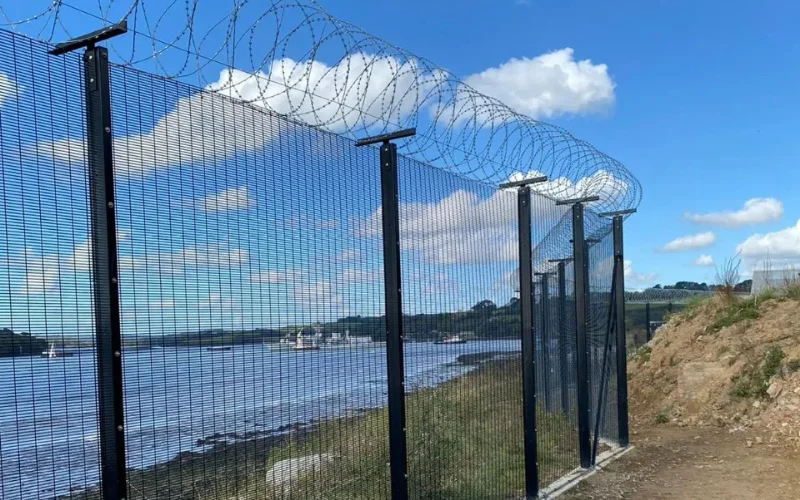
FST & Fence Security Topping Add-Ons for Canadian Perimeters
Binns Canada supplies FST and compatible hostile/non-hostile topping add-ons as part of complete Binns fence packages. Razorwire elements are not stocked or sold by themselves; they are specified only with FST or compatible fencing when the project calls for added climb resistance and delay.
Backed by 85+ years of global protective security experience, we help owners, specifiers and contractors select compatible toppings and plan their perimeter projects.
Why toppings from Binns Canada
- Built for integration. Our fence systems—including CANFEN 358 A1 (SR1) —state that additional hostile and non-hostile security toppings can be incorporated into the final fence line to further prevent scaling. That means the fence line you already supply can be finished with the right topping from day one.
- Choice for every risk profile. From FST-compatible hostile elements to non-hostile options and our Flexible Security Topping (FST) , you can match public-facing, staff-only, or high-security requirements without redesigning the base fence.
- Specified as part of the full fence package . Razor wire elements are available only where the compatible fence or FST specification calls for them; they are not offered as standalone fence topping stock.
Sam Bradbury is a Director with the Canadian Fence Association and Chairing the Committee for Standards and Best Practices within the CFA.
Product range overview
We only list products you have provided to us. If you need a cut sheet for tender, ask and we’ll send the latest PDF and DWG.
Fence topping add-ons for compatible perimeters
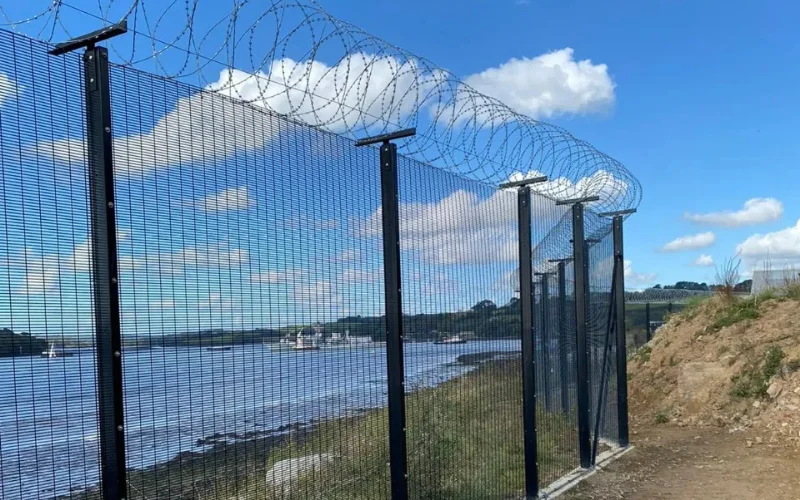
Razorwire elements can complete a fence line with a visible deterrent when they are specified as part of an FST or compatible Binns fence package. These elements mount to compatible topping brackets for our mesh and palisade lines, and can also be added to gate heads to maintain continuity at access points.
Specify toppings with a compatible mesh or vertical steel palisade system. Confirm suitability for the selected fence, application and security requirements with our team.
FST flexible security topping on perimeter fence
Your range includes Flexible Security Topping (FST) —a topping designed to be fitted to the fence or gate head as an additional anti-scale measure. Ask for the FST spec sheet to confirm mounting options and lineal coverage for your layout.
Where it helps: perimeter lines where a visible, dynamic topping is preferred over static blades and where a non-hostile appearance might be required in parts of the site.
CANFEN hostile razor wire fence topping
The CANFEN Toppings – Hostile & Non-Hostile line gives contractors the flexibility to finish a perimeter in areas with public-facing constraints (non-hostile) as well as high-risk zones (hostile). These are designed as compatible add-ons to our fence panels and posts.
Typical uses: transitions near site entrances, staff parking interfaces, or anywhere your client requires a graduated deterrent strategy.
Toppings for mesh and vertical steel palisade
Your product data for CANFEN 358 A1 (SR1) confirms that “additional hostile and non-hostile security toppings can be incorporated into the final fence line to further prevent scaling.” That’s exactly how we engineer our systems across the range— posts, clamp bars and gate heads are laid out to accept topping brackets and keep the line continuous over corners and changes in level.
When you’re installing CANFEN 358, 868, ArmaWeave, ULTRAGUARD B3 (SR2) or ULTRAGUARD SUPER 5, CANFEN COMBI or CANFEN DEFENDER , our team will help you select the correct bracket sets and post centres for a tidy, fast installation.
Practical support for your project
- Buildability in winter. We’ll help you sequence topping installation around coatings and panel fixings so crews work safely and quickly when the weather turns.
- Coastal and industrial sites. For environments that demand higher durability, compatible packages can include stainless steel razorwire elements, and we can provide guidance on selecting the right finish for challenging conditions.
- Clear submittals. We prepare drawings that show topping type, bracket detail, fence height, gate head arrangements and any transition to non-hostile sections—reducing back-and-forth during approval.
Planning your topping package
- Define zones. Mark where the client accepts hostile topping elements and where non-hostile options are required.
- Match the fence line. Confirm the base fence (e.g., CANFEN 358 or 868) and gate types so we can supply compatible brackets, clamp bars and hardware.
- Check services. Verify overhead lines and lighting to set safe stand-off for FST or compatible hostile topping elements.
- Confirm finish. Standard project finishes align with the coating guidance on your fence product pages; marine options available on request.
- Add signage. We can advise on standard warning signage positions; confirm final wording and locations with local by-laws and the client’s HSE lead.

Where toppings fit in your sectors
Across your HVM and anti-climb pages the application lists include public realm, stadiums, retail parks, leisure attractions, critical infrastructure, police stations, government buildings, data centres, shopping centres and airports . Toppings allow you to tune the visual deterrent and risk level for each of these Canadian environments while using the same core fence specification.
Certifications & industry involvement
- Active members of AFI, AFA, Fence Workers Association (FWA) and the Canadian Fence Association (CFA)
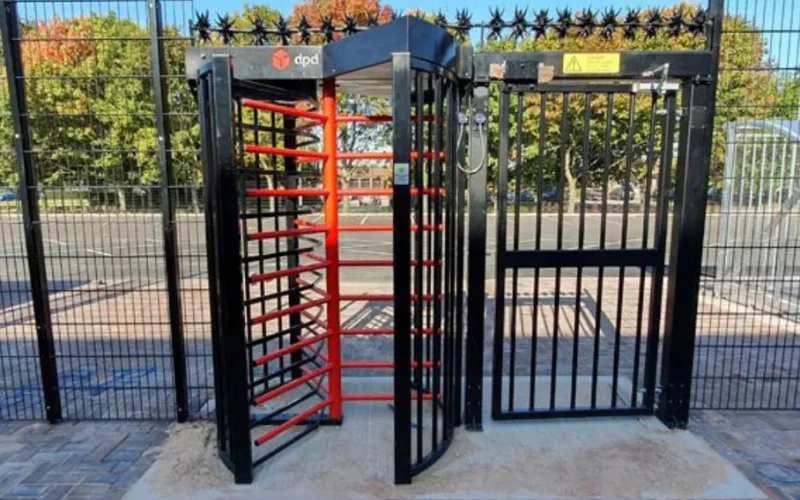
How we support your perimeter project
- Specification help. We match topping type to your fence model and risk zones using the published specifications for each system—no guesswork.
- Supply only or supply-and-assist. We ship across Canada and can support take-offs, bracket schedules and installation best practice.
- One call for the full perimeter. Need mesh, gates, HVM and toppings on one job? We’ll package everything so hardware, centres and heights line up on site.
Request drawings or a quote: 877-572-4667 • [email protected]
FAQs
Which fences can I add FST or hostile topping elements to?
Compatible hostile and non-hostile toppings are available for mesh and vertical steel palisade fencing. The CANFEN 358 A1 (SR1) specification includes topping options; ask us to confirm the suitable topping and supporting details for your selected system.
What’s the difference between “hostile” and “non-hostile” toppings?
Hostile topping elements, when specified as part of an FST or compatible fence package, add a sharp, high-deterrence profile for higher-risk zones. Non-hostile toppings from the CANFEN Toppings range provide a visible barrier without the same aggressive appearance—useful on public-facing edges or where the client wants a softer look while still discouraging climbs.
Do your toppings work with gates as well as fence runs?
We’ll match topping brackets to your gate posts and head details so you keep a continuous line across access points. Send the gate type (swing, sliding or bi-fold) and clear opening, and we’ll confirm the compatible CANFEN hostile/non-hostile or FST solution for that model.
Can I use Flexible Security Topping (FST) where razor wire isn’t suitable?
Yes. FST is part of our topping range and is ideal where a visible, dynamic deterrent is preferred over static blades or where the client wants a less aggressive look. It’s commonly used to boost delay on standard anti-climb mesh without changing the base fence specification.
Will adding toppings change the fence’s SR rating?
Security ratings (e.g., LPS 1175) apply to the fence or gate system as tested . Toppings increase deterrence and delay but don’t replace the base rating unless the topping is part of a tested assembly. We’ll align your topping choice with the SR1/SR2/SR3 fence or gate you’re installing and note that relationship in your submittal.
What finishes are available to match the fence line?
Our product literature details posts, panels, gates and other components with a protective zinc layer and an electrostatically applied polyester powder coating (as referenced in BS 1722-16). We provide topping hardware in matching finishes to ensure a consistent, professional appearance across the complete fence line.
How do I plan toppings on slopes, corners and changes in level?
Mesh systems can be stepped or raked as appropriate to the selected model; vertical steel palisade naturally follows the finished grade and can rake up to 45 degrees. Topping brackets and post centres must suit the fence and site. Share your site plan, terrain notes and chosen system so we can confirm the compatible topping and bracket schedule.
Are toppings compatible with HVM perimeters?
Yes. Toppings sit on the fence or top of the gate , while HVM (bollards, Springline, road blockers) handles vehicle impact . We’ll ensure the topping brackets, post centres (e.g., 2200–2536 mm, subject to the selected mesh system) and HVM set-backs work together so crews can build the perimeter without clashes.
What information do you need to price FST or topping add-ons quickly?
Send the fence model (e.g., CANFEN 358/868/ArmaWeave/UltraGuard), height, run length, gate types and widths , any public-facing zones needing non-hostile options, and your finish requirement. We’ll return a bracket take-off , lineal quantities and a clean quote for your bid.
Do I need signage or approvals for hostile toppings in Canada?
Requirements vary by municipality and client. We recommend warning signage at intervals and at access points, and we’ll mark suggested positions on your drawings. Always confirm final wording and placement with local by-laws and the client’s safety lead before install.
2 systems
FST & Fence Security Toppings systems
Every system below is supplied, specified and supported by Binns Canada.
-

CANFEN Toppings — Fence Add-On Packages
CANFEN security toppings are specified as compatible add-ons to Binns fence systems or FST packages. Binns Canada does not…
View product -
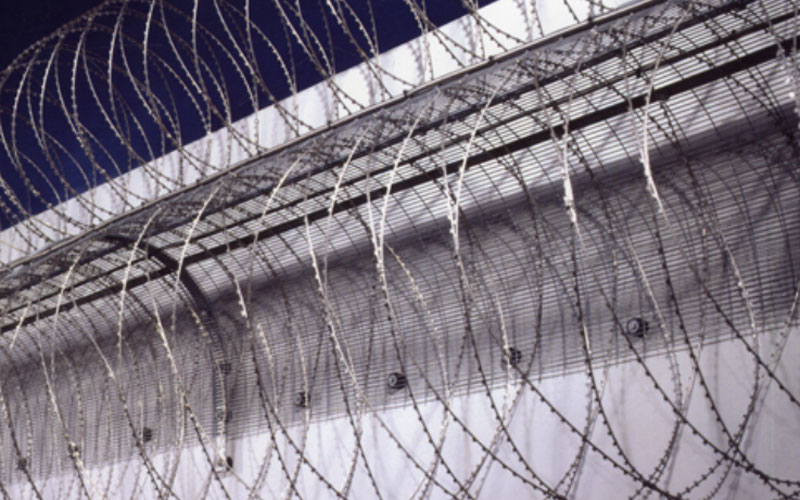
Flexible Security Topping (FST)
FST® is a high-security topping system specified as part of a compatible fence package. Razor-wire elements are supplied only…
View product
Specify with confidence
Not sure which system meets your rating?
Tell us the threat you're designing against and the standard you have to meet. We'll point you at the right system — or tell you if you need a different one.
Request a quote
FST & Fence Security Toppings — tell us about your site.